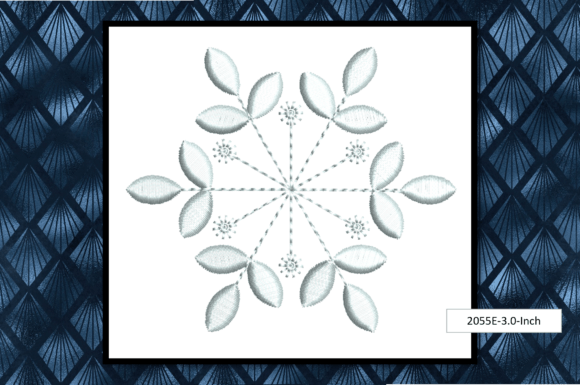
Snowflake-Trilogy-C: A Refined Embroidery Asset for Small Business Branding
First Impression: Delicate, Timeless, and Professionally Versatile
As an embroidery designer who’s developed over 300 commercial designs for small businesses—from artisanal bakeries to indie florists—I opened Snowflake-Trilogy-C expecting a seasonal motif. What I found was something more: a beautifully balanced machine embroidery design that reads as both hand-crafted and polished. The “delicate snowflake” description is accurate—but it’s not fragile in execution. It carries quiet elegance, with clean line work and intentional negative space that avoids visual clutter. For small business merch, that means instant professionalism. It leans classic rather than trendy, making it ideal for brands that value longevity over fleeting novelty—think boutique gift shops, heritage-style cafés, or handmade pet accessory lines launching holiday collections.
Real-World Performance Across Business Applications
Snowflake-Trilogy-C shines where many holiday designs falter: consistency across scale and surface. As an embroidered patch, it holds crisp definition even at 2.5 inches tall—ideal for sleeve accents on staff aprons or tote bag corners. On caps, it works cleanly on the front panel when digitized with appropriate underlay and reduced density; its open structure avoids stiffness or puckering on curved crowns. For custom apparel like work shirts or bakery smocks, it reads clearly at chest-logo size (3–3.5 inches) without overwhelming the garment.
What sets Snowflake-Trilogy-C apart for small business use is its adaptability to tactile branding. On textured fabrics—like linen aprons, canvas totes, or wool-blend blankets—it doesn’t fight the grain. Its moderate stitch density allows fabric drape to remain intact, which matters for customer-facing items where comfort and authenticity reinforce brand trust. As a product packaging accent—say, stitched onto a reusable gift bag or branded tea towel—it elevates perceived value without shouting “Christmas.” That subtlety makes it viable beyond December: pair it with neutral thread colors (heather grey, oat, deep navy), and it becomes a year-round signature mark for winter-themed product lines.
Where Caution Is Required: Smart Placement & Production Notes
Even refined designs have boundaries—and knowing them prevents costly re-runs. Snowflake-Trilogy-C should be used carefully on surfaces under 1.75 inches: tiny cap back logos or micro-patches risk losing definition in the outer arms of the snowflake. Avoid placing it directly over heavy seams or highly curved areas (like gussets or elbow bends) unless you’ve tested stabilizer pairing first. On dark uniforms—especially black or charcoal twill—verify thread color contrast early: light silver or ecru may vanish without proper underlay or a subtle satin fill.
Also note: while the design is described as “delicate,” that delicacy comes from proportion—not fragility. Don’t assume it’s low-stitch-count. Always check the actual embroidery file’s stitch count before quoting production time or pricing. High detail in the inner tracery can increase run time and thread consumption—critical for Etsy sellers batching 50+ embroidered totes or craft studios fulfilling wholesale orders.
Strengthening Brand Identity—Beyond the Holiday Season
Small businesses often underestimate how much a single, well-executed embroidery design contributes to visual consistency and buyer engagement. Snowflake-Trilogy-C supports cohesive branding because it’s distinctive yet restrained. Unlike cartoonish or overly ornate snowflakes, it pairs seamlessly with serif logotypes, minimalist typography, or hand-drawn illustrations—making it a flexible anchor in your design assets. When repeated across aprons, staff caps, and customer gift tags, it builds recognition without repetition fatigue.
For handmade product sellers, that consistency signals intentionality. Customers associate crisp, balanced embroidery with care in craftsmanship—which directly lifts perceived quality and justifies premium pricing. And because it avoids overt religious or commercial clichés, it resonates across diverse audiences: a pet brand’s holiday bandana line, a florist’s seasonal workshop kit, or a creative studio’s limited-edition tote—all feel authentically aligned, not templated.
Practical Designer Notes Before You Stitch
Before committing Snowflake-Trilogy-C to your next commercial embroidery project, follow these field-tested steps:
- Test in black and white first—this reveals balance, spacing, and potential density issues faster than color.
- Check minimum viable patch size: resize to 2 inches and stitch a sample on your target fabric + stabilizer combo.
- Review thread color contrast on both light and dark substrates—don’t rely on screen previews alone.
- Inspect spacing between arms: tight gaps may close up on plush or loosely woven fabrics.
- Confirm hoop size compatibility with your embroidery machines—especially if running high-volume batches.
- Test on real fabric, not tear-away mockups: texture and stretch dramatically affect final appearance.
- Use appropriate stabilizer: medium-weight cutaway for knits, lightweight tear-away for stable wovens like cotton canvas.
- Create a printable mockup for client approval—show it on actual product photos, not blank templates.
- Compare beside existing design assets: does it harmonize with your logo, typography, and other embroidered elements?
- Verify commercial licensing before use on merchandise for resale—never assume personal-use files are cleared for business.
Remember: Snowflake-Trilogy-C isn’t just another Christmas embroidery file. It’s a strategic visual tool—one that, when applied thoughtfully, reinforces brand identity, enhances product value, and quietly tells customers: This business pays attention to detail. Whether you’re stitching 12 aprons for a local café or 200 patches for an Etsy launch, treat it like the professional asset it is—not just seasonal decoration.