Nurse Ghost: A Designer’s Real-World Embroidery Review
First Impression: Playful, Not Spooky—And That’s the Point
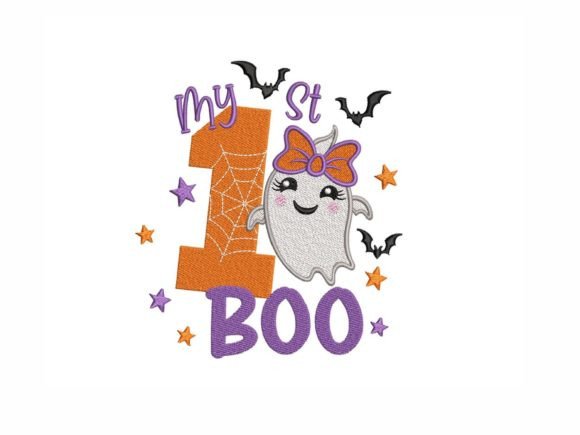
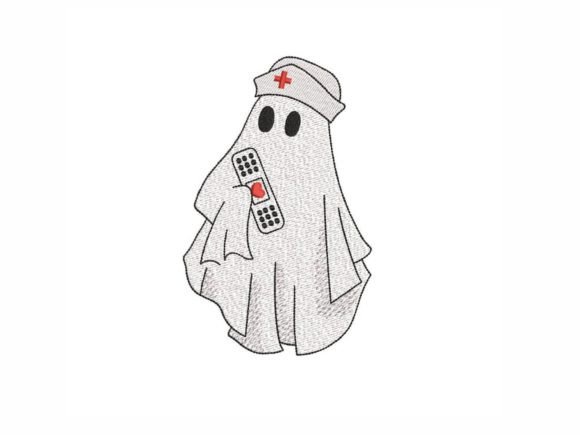
When Nurse Ghost landed in my inbox, I paused—not because it startled me, but because it made me smile. This isn’t a shrieking ghoul or a dripping specter. It’s a soft-edged, slightly cheeky nurse figure with a translucent ghostly body, a tiny cross on her cap, and just enough detail to read clearly at 3–4 inches tall. The shape is compact and balanced: no long trailing threads, no awkward limbs stretching past the hoop boundary. As a machine embroidery design, it feels intentionally scaled for real-world use—not oversized for show, not cramped for clarity.
A Real Project Test: Custom Tote Bags for a Local Pediatric Clinic’s Halloween Event
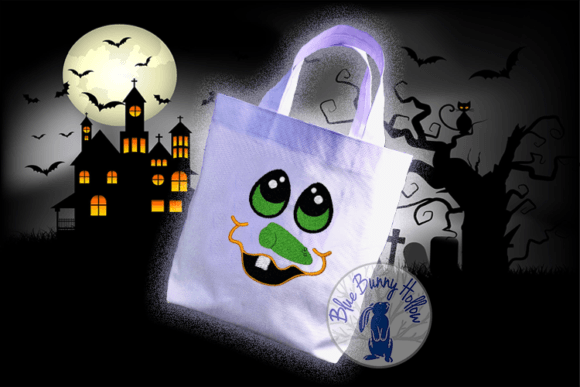
Last week, I stitched Nurse Ghost onto six organic cotton tote bags for a small clinic’s family-friendly Halloween event. We used mid-weight tear-away stabilizer, 40-weight polyester thread, and a 5×7 hoop. On light fabric, the satin-stitched cap and subtle fill-stitched gown held crisp definition. On charcoal totes, I swapped to white thread with a single layer of cut-away stabilizer underneath—and yes, it popped cleanly. No sinking, no puckering. That tells me Nurse Ghost has thoughtful stitch density: dense enough for coverage, light enough to avoid stiffness on breathable fabrics.
Where It Shines (and Where It Needs Care)
- Custom apparel: Works beautifully on crewneck sweatshirts—no distortion around the shoulder seam thanks to its centered, vertical layout. Avoid placing it directly over thick ribbing or side seams without extra stabilizing.
- Tote bag design & pillow covers: Its clean silhouette reads well from across a room. Perfect for boutique merchandise where charm and legibility matter more than horror.
- Baby embroidery & nursery decor: Gentle enough for onesies and burp cloths—just confirm your thread is OEKO-TEX® certified if stitching for infants.
- Embroidered patch: Would convert well to an iron-on or sew-on patch with minor digitizing tweaks (e.g., tighter satin borders). As-is, it’s optimized for direct-to-fabric stitching—not standalone patch backing.
- Small hoop sizes: Fits comfortably in a 4×4 hoop at ~3.2" tall—but test first. Tiny eyes and the cross detail tighten up noticeably below that scale.
- Textured or stretchy fabric: Use cut-away stabilizer on knits; skip lightweight tear-away on terry cloth towels—it’ll shift under the needle.
What Customers Actually Notice (Not Just What Stitches Deliver)
People don’t buy embroidery—they buy feeling. Nurse Ghost lands as warm, nostalgic, and quietly clever. At craft fairs, buyers pointed to it first on baby blankets and aprons—not because it’s flashy, but because it says something: “I get you. You’re a caregiver who also loves Halloween.” That kind of resonance lifts perceived value. A $28 embroidered tea towel with Nurse Ghost sells faster than one with generic bats, even at the same price point. Why? It feels intentional, not algorithmic. It supports brand consistency for small shop owners who curate themes—think “whimsical healthcare” or “gentle holiday”—not just seasonal decoration.
Design Assets That Earn Their Place in Your Workflow
Nurse Ghost isn’t just another Halloween embroidery file—it’s a versatile design asset. I’ve used it in three distinct ways this season: as a focal point on a linen apron (paired with simple running-stitch hems), as a secondary motif along the hem of a toddler’s dress (scaled down to 1.8"), and as part of a printable mockup series for my Etsy listings. In every case, it held up visually—even in grayscale previews. That’s rare. Many designs lose personality when stripped of color, but Nurse Ghost’s strong outline and balanced negative space keep it readable.
Practical Notes Every Embroiderer Should Check Before Stitching
- Test Nurse Ghost on scrap fabric *first*—especially if using dark thread on light fabric or vice versa. Some satin stitches can reflect differently than expected.
- Review stitch density in your embroidery software. If it looks unusually heavy in the ghost body, double-check for hidden underlay layers—some versions include optional stabilizing passes.
- Confirm hoop size compatibility. While it fits standard 4×4 and 5×7 hoops, verify your machine’s actual stitching area—not just the hoop label.
- Inspect small details: the cross on the cap, the curve of the ghost’s “smile,” and the edge of the hem. These are where thread breaks or skipped stitches often show up.
- Try black-and-white mockups. Does it still communicate tone and intent? Nurse Ghost does—which means it’ll translate well across product photos, social posts, and packaging.
- Check licensing before selling finished products. Nurse Ghost is marketed for apparel, home decor, and accessories—but confirm whether resale of physical items requires attribution or limits on quantity.
Final Thought: A Design That Serves the Maker *and* the Buyer
As someone who’s digitized, stitched, and sold hundreds of embroidery files, I judge Nurse Ghost not by how many ghosts it includes—but by how reliably it helps me make something people want to hold, wear, and give. It’s not trying to be everything. It’s a focused, well-constructed machine embroidery design that earns its spot in a craft business toolkit. Whether you’re an Etsy seller building a cohesive Halloween collection, a boutique owner sourcing handmade product lines, or a parent stitching personalized gifts, Nurse Ghost delivers quiet professionalism—not noise. And in embroidery, where every thread counts, that’s the highest compliment.