Pumpkin Scroll-a: A Boutique Embroidery Review
First Impressions: Playful, Rustic, and Ready for Apparel
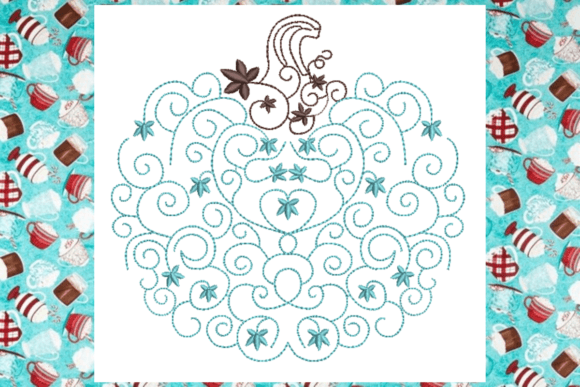
As an embroidery designer who’s developed over 200 boutique-ready collections, I opened Pumpkin Scroll-a expecting seasonal charm—and got something more: a cohesive, redwork-driven motif with strong visual rhythm. It reads as playful yet grounded—think rustic autumn rather than cartoonish Halloween. The scrollwork wraps around the pumpkin with intentional negative space, giving it breathing room on fabric. There’s no excessive fill stitching; instead, clean outlines and subtle interior flourishes create texture without heaviness. That’s critical when planning sweatshirt embroidery or hoodie chest placement—where density can make or break drape and comfort.
Sweatshirt & Hoodie Performance: Chest, Sleeve, and Back Options
Pumpkin Scroll-a shines on neutral sweatshirts—cream, oatmeal, charcoal—because its redwork aesthetic relies on contrast, not saturation. On light fabrics, standard red or brick thread pops cleanly; on dark apparel, switching to mustard, burnt orange, or even deep olive maintains legibility while softening the holiday formality. I tested placement options: centered chest (ideal for small-shop product consistency), left sleeve (a subtle nod for lifestyle branding), and upper back (elegant for oversized hoodies). All worked—but only because the design avoids tight corners and dense stitch clusters that snag on fleece or ribbed fabric.
The four included sizes are a quiet strength. The smallest fits neatly in a 4x4 hoop for t-shirt embroidery or denim jacket pockets; the largest scales beautifully across the back of a relaxed-fit hoodie without distortion. No stretching, no warping—just balanced proportions that honor the original scroll’s flow.
Beyond the Sweatshirt: Totes, Denim, and Seasonal Lifestyle Pieces
This isn’t just a Thanksgiving embroidery file—it’s a versatile anchor for cozy seasonal merchandise. On natural canvas tote bags, Pumpkin Scroll-a reads as artisanal and intentional, especially when stitched with matte cotton thread. On lightweight denim jackets, it holds up during wear and wash—thanks to minimal jump stitches and thoughtful redwork logic (fewer trims = fewer thread ends to fray). For Etsy sellers building a “slow autumn” capsule, pairing it with hand-dyed knits or linen-blend tees reinforces brand identity without shouting.
In printable mockups and social media graphics, Pumpkin Scroll-a delivers instant visual consistency. Its scroll structure frames product photos naturally—no awkward cropping needed. And because it avoids tiny lettering or micro-details, it translates clearly even in thumbnail-sized Etsy listings.
Where to Use It Carefully—and Why
Like any thoughtful embroidery file, Pumpkin Scroll-a has boundaries. Avoid placing it directly over curved seams (like shoulder yokes) unless you’ve tested stabilizer behavior on your exact garment style. Stretchy fabric—especially lightweight French terry or banded cuffs—requires cutaway stabilizer and possibly reduced top tension to prevent puckering around the outer scroll curves.
Dense areas? Minimal here—but the pumpkin’s stem and inner scroll loops do carry slightly higher stitch density. On fleece-lined hoodies, that’s fine; on ultra-thin modal tees, consider simplifying with a single-outline version (if your machine supports editing) or opting for the smallest size only. Also: always test on scrap fabric *from the same dye lot*—fabric texture shifts color perception and stabilizer adhesion more than most designers anticipate.
Impact on Brand Value and Customer Trust
For small clothing brands and handmade product creators, Pumpkin Scroll-a quietly elevates perceived value. Its redwork heritage feels intentional—not algorithm-generated or trend-chasing. Buyers notice that. When customers see consistent, well-placed embroidery across your sweatshirt line, tote collection, and denim pieces, they associate your boutique brand with craftsmanship, not convenience. That builds trust faster than any product description.
It also supports visual consistency across platforms. Whether used in a lifestyle photo shoot (think wool socks + steaming mug + embroidered hoodie), a Reel showing stitch progression, or a printed hang tag, Pumpkin Scroll-a acts as a recognizable motif—subtle enough for repeat wear, distinct enough to spark recognition.
Practical Designer Notes Before You Stitch
- Test on scrap fabric—especially if using stretchy, napped, or ribbed materials.
- Confirm stabilizer choice: medium-weight cutaway for sweatshirts and hoodies; tear-away for stable cotton tees.
- Review thread color contrast before finalizing—redwork relies on clarity, not just hue.
- Check hoop size requirements for each of the four sizes—some may need 5x7 or larger for optimal tension control.
- Inspect stitch density visually in your embroidery software—look for overlapping runs or tight clusters near curves.
- Test on the exact garment fabric you’ll sell—not just a generic swatch.
- Compare placement options using a fabric marker and measuring tape before hooping.
- Verify Creative Fabrica product details—including licensing terms—before producing commercial embroidery products for resale.
Final Thought: A Thoughtful Addition to Your Digital Embroidery File Library
Pumpkin Scroll-a won’t replace your core monogram or minimalist logo—but it fills a specific, valuable gap: elevated seasonal storytelling for boutique apparel. It bridges handmade warmth and professional polish. For Etsy sellers launching a fall capsule, embroidery shops adding curated Thanksgiving designs, or small clothing brands building lifestyle cohesion, this is more than a holiday embroidery file. It’s a quiet signature—one that says you understand how stitch, scale, and context shape customer experience. Just remember: great embroidery starts long before the needle drops. Read the details, test deliberately, and let the scroll do the talking.