Fall Countryside Bunny, E2E Quilting
First Impressions: Warm, Whimsical, and Quietly Confident
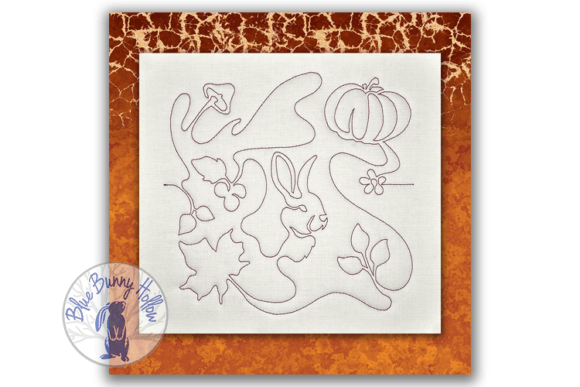
When I opened Fall Countryside Bunny, E2E Quilting for the first time, I didn’t see just another autumn embroidery file—I saw a mood. Soft curves, balanced negative space, and that gentle bunny nestled among maple and oak leaves suggest quiet celebration rather than seasonal overload. It’s not loud or overly detailed; it’s designed to breathe on fabric. That matters—especially when you’re stitching for real people who’ll hold, wear, or gift the finished product.
A Real Project Test: The Autumn Tote Bag Series
Last week, I prepped three custom tote bags for a local boutique: one in oat linen, one in heavyweight canvas, and one in brushed cotton twill. All were slated for Fall Countryside Bunny, E2E Quilting centered on the front panel. Why this design? Because it reads clearly at 5.5" wide—large enough to anchor the bag but small enough to avoid overwhelming the shape. The bunny’s rounded silhouette and leaf outlines held up beautifully in satin stitch, while the fill-stitch ground kept texture rich without puffing. Customers responded immediately—not with “cute!” but with “I *feel* fall when I look at it.” That’s the difference between decoration and resonance.
Where It Shines (and Where It Asks for Thought)
Fall Countryside Bunny, E2E Quilting works exceptionally well for:
- Custom apparel: Sweatshirts, crewneck tees, and lightweight hoodies—especially when placed on the left chest or lower back. The motif’s vertical rhythm flatters garment drape.
- Baby embroidery: On organic cotton burp cloths or muslin swaddle blankets, its gentle scale and nature-based softness land perfectly—no sharp edges, no visual clutter.
- Patches & aprons: As an embroidered patch, it stitches cleanly with minimal thread breaks. On denim or linen aprons, it adds warmth without competing with functional pockets or ties.
- Holiday gifts & boutique branding: Paired with neutral packaging and a handwritten tag, it elevates handmade presentation without needing embellishment.
But—and this is where experience kicks in—it asks for care on:
- Thin or stretchy fabric: Like modal jersey or lightweight rayon. Without proper cutaway stabilizer and reduced top tension, the bunny’s satin-stitched ears can pucker. Always test on scrap first.
- Curved surfaces: Caps or beanies require repositioning the design toward the flat front panel and confirming hoop clearance. The leaf swirls near the outer edge may compress slightly—review your machine’s stitch path preview.
- Dark fabric backgrounds: The design relies on subtle tonal shifts. On charcoal or navy, use high-contrast thread (cream, mustard, or burnt sienna) instead of beige. A black-and-white printable mockup helps spot low-contrast zones before stitching.
- Frequent-wash items: Think tea towels or baby bibs. Confirm stitch density isn’t too light—if fill areas are sparse, washing may cause fraying over time. A medium-density version (if offered) often performs better long-term.
What It Does for Your Craft Business
As an Etsy seller and small shop owner myself, I judge designs by how they affect buyer trust and perceived value—not just prettiness. Fall Countryside Bunny, E2E Quilting builds trust because it looks intentional, not algorithmically generated. Its balance of open space and detail says “made with attention,” which justifies a thoughtful price point. When customers see it stitched on a linen pillow cover or personalized sweatshirt, they don’t question craftsmanship—they imagine gifting it. That translates directly to repeat orders and word-of-mouth referrals.
For digital product sellers: This design fits naturally into curated autumn collections alongside coordinating leaves, acorns, or minimalist pumpkins. Its clean lines also scale well in printable mockups—no pixelation, no awkward cropping. Just make sure licensing allows commercial use *and* resale of finished items before listing it as part of a bundle.
Designer Notes You’ll Actually Use
Before sending Fall Countryside Bunny, E2E Quilting to your machine or client files, do these five things:
- Test on scrap fabric—same type, same stabilizer, same thread. Watch how the bunny’s face stitches: are eyes defined? Do leaf veins read clearly?
- Review stitch density in your embroidery software. If fill areas feel sparse on screen, they’ll look thin on fabric—especially on textured weaves like burlap or bouclé.
- Confirm hoop size compatibility. Edge-to-edge doesn’t mean “fits any hoop”—it means the design is built to maximize standard quilting hoop dimensions. Check your machine’s max width before assuming it’ll fit your 6x10 frame.
- Inspect small details at 200% zoom: tiny stems, inner leaf contours, and the bunny’s ear curve. If those vanish or distort in your software, the file may need cleanup—or may not suit ultra-fine work like baby onesies.
- Use proper stabilizer. Medium-weight cutaway works best for most uses. Skip tear-away for anything with stretch or drape—it won’t support the satin-stitched curves long-term.
Final Thought: Not Just Autumn—It’s Intention
This isn’t just another machine embroidery design you drop into a project and move on. Fall Countryside Bunny, E2E Quilting invites slower decisions: Which thread palette deepens the season without shouting? Where does it land best on a curved surface? How does it change when stitched on oat vs. indigo-dyed linen? Those questions—answered through testing, not assumptions—are what separate solid craft business from fleeting trend-chasing. Use it with that kind of attention, and it won’t just decorate your products. It’ll deepen them.