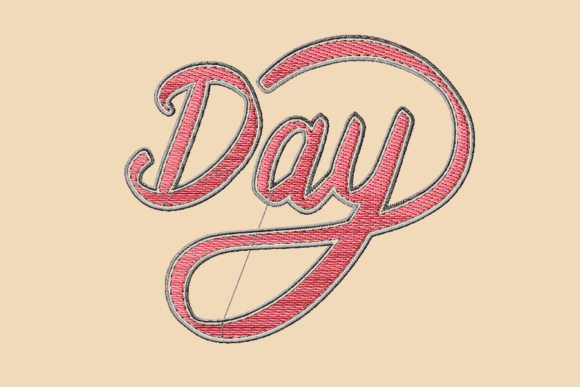
Day Pretty Lettering
A Thoughtful First Impression for Boutique Apparel Designers
As an embroidery designer who’s developed collections for small clothing brands and Etsy sellers over the past decade, I opened Day Pretty Lettering with quiet curiosity—not hype. The name alone hints at softness and intentionality, and the preview delivers: it’s a casual yet elegant machine embroidery design with gentle curves, balanced spacing, and subtle decorative flair. It doesn’t shout; it invites. That’s rare in lettering meant for winter-themed apparel—where many designs lean either overly ornate or too stark. Day Pretty Lettering lands in that sweet spot: feminine without being fussy, relaxed without feeling unfinished. Its stitching mood is calm and confident—ideal for brands building a cohesive, lifestyle-driven identity around comfort, mindfulness, or seasonal warmth.
How It Performs Across Real Apparel Surfaces
For sweatshirt embroidery and hoodie design, Day Pretty Lettering shines on chest placement—especially on neutral heather grays, oatmeals, and soft creams. Its moderate height and open letterforms avoid bulkiness, letting the fabric texture breathe beneath each stitch. On oversized garments, it reads cleanly from a distance without losing legibility up close—a win for boutique brand consistency. When placed on sleeve accents (think left cuff or upper bicep), its light density keeps movement unrestricted, unlike heavier script fonts that can stiffen knitwear.
On dark apparel—charcoal fleeces, black hoodies, navy denim jackets—the design gains quiet sophistication when stitched in matte ecru, heather gray, or deep burgundy thread colors. It avoids the “glow-in-the-dark” contrast that cheapens handmade product perception. For t-shirt embroidery, I’d recommend pairing it with lightweight tear-away stabilizer to preserve drape, and testing on a scrap of the exact jersey blend you’ll use—ribbed fabric and stretchy knits demand attention to stitch density and tension.
Tote bags and cozy seasonal outfits (think fleece-lined loungewear sets) also benefit from its restrained scale. Unlike dense monograms or all-caps block fonts, Day Pretty Lettering doesn’t overwhelm natural fibers or compete with texture. It enhances rather than masks—making it ideal for printable mockups used in Etsy listings or social media graphics where visual authenticity matters.
Where to Use It—and Where to Pause
Day Pretty Lettering excels in small chest placement, back yoke accents, and interior neck tags for premium positioning. Its clean lines hold up beautifully on curved surfaces like hoodie hoods or rounded tote bag gussets—no distortion if hooped carefully. But caution applies where precision is non-negotiable: avoid tiny placements (under 2.5 inches wide) unless you’ve verified the file’s smallest recommended hoop size. Also, test thoroughly on stretchy fabric before committing to a full run—some delicate flourishes may shift if stabilizer choice isn’t matched to fabric weight.
Fleece and heavy French terry require medium-weight cut-away stabilizer underneath to prevent puckering, especially in denser sections of the lettering. And while the design feels inherently premium, don’t assume it’s automatically “high-end”—its value emerges only when paired intentionally: thoughtful thread colors, consistent placement across your collection, and alignment with your brand voice (e.g., pairing it with minimalist packaging or warm-toned lifestyle photography).
Impact Beyond the Stitch
For small shop product development, Day Pretty Lettering does more than decorate—it supports buyer trust. Clean, well-digitized lettering signals professionalism. Customers scrolling Etsy or Instagram notice the difference between rushed digitizing and intentional craftsmanship. That perception directly affects perceived value, repeat purchase likelihood, and organic sharing. When your custom apparel uses consistent, emotionally resonant typography like Day Pretty Lettering, it strengthens visual consistency across your entire product ecosystem—from physical finished product to digital embroidery file previews and even printed hang tags.
It also elevates customer engagement: shoppers connect with phrases that feel personal and seasonally grounded. “Day Pretty” works subtly for winter-related sewing projects without leaning into clichés (“Cozy Season,” “Snow Day”). That nuance helps boutique brands stand out in saturated markets—especially when layered with other Creative Fabrica embroidery elements like minimal florals or abstract line art.
Practical Designer Notes Before You Stitch
- Always test on scrap fabric—match fiber content, weight, and finish to your final garment.
- Confirm stabilizer choice: lightweight tear-away for tees, medium cut-away for fleece or ribbed knits.
- Review thread color contrast carefully—what reads softly on screen may vanish on dark apparel.
- Check Creative Fabrica product details for included formats, recommended hoop size, and any notes about stitch density or underlay.
- Inspect the embroidery file for jump stitches or excessive trims that could disrupt flow on curved seams.
- Compare placement options across garment types—chest, sleeve, back—to find what best serves your collection’s rhythm.
- Verify licensing terms before producing commercial embroidery products for resale—especially important for Etsy sellers and digital sellers offering finished apparel.
Final Thoughts for the Intentional Maker
Day Pretty Lettering isn’t flashy—but it’s reliable, versatile, and quietly distinctive. As part of a winter capsule collection, it adds cohesion without repetition. Used thoughtfully, it becomes part of your brand’s visual language—not just decoration, but punctuation. Whether you’re launching a new small shop product line, refreshing seasonal merchandise, or curating a signature hoodie design for your boutique brand, this embroidery file earns its place in your Creative Fabrica library. And as a Freebies offering? It’s a smart starting point—low risk, high potential—for testing tone, fit, and resonance before investing in larger bundles or custom digitizing.